


Introduction
There are four ways to reach Dudhkunda: on foot, by jeep, on a mountain bike, or on a motorbike, and all four end at the same milky-white lake sitting at 4,561 metres under Numbur Himal in Solukhumbu. That’s the part most blogs about this trek leave out. Dudhkunda isn’t a one-route destination.
If you’ve been searching for a hidden trek in Nepal, lakes in Nepal, or an alternative Everest trek that hasn’t already been done to death online, this is usually the one we end up recommending.
We’re going to walk you through all four, honestly, the way we’d explain it over coffee in our Kathmandu office. We’ve recently driven the jeep route ourselves, and our guiding team has ridden the Solukhumbu trails on mountain bikes more times than they can count. So, this isn’t a copy-paste of someone else’s itinerary; it’s what we’ve actually seen on the ground and what we tell every traveler who walks into our office asking, “So which one should I do?” By the end of this guide, you’ll know exactly which version of Dudhkunda fits you, and if you want, our team at Himalayan Leaders will build the itinerary around it, whether that’s a slow-paced trek, jeep safari, a multi-day enduro ride, or a Himalayan motorbike trip you’ll be talking about for years.
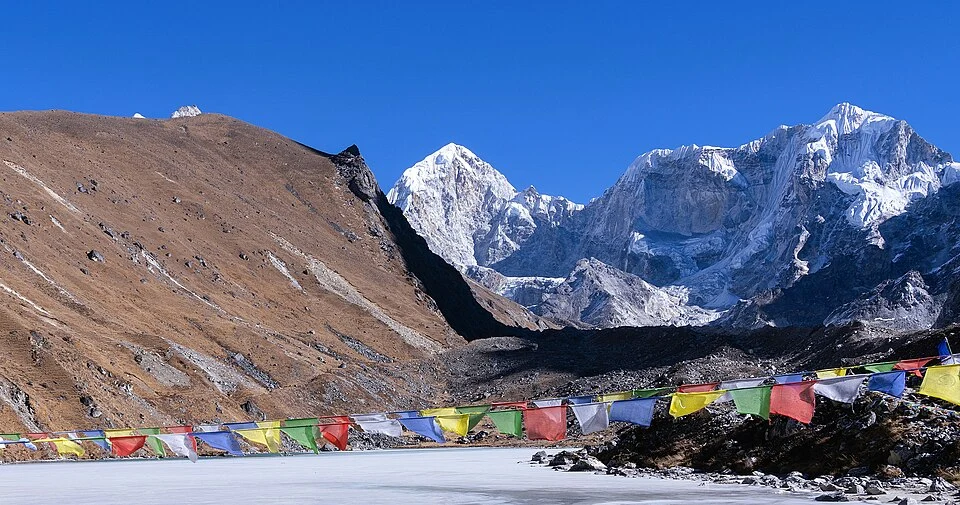
Table of Contents
What Makes Dudhkunda One of Nepal’s Most Unique Himalayan Destinations?
Most people we talk to have never heard of Dudhkunda before they call us. That’s not a marketing problem; it’s actually the appeal.
Where is Dudhkunda Located?
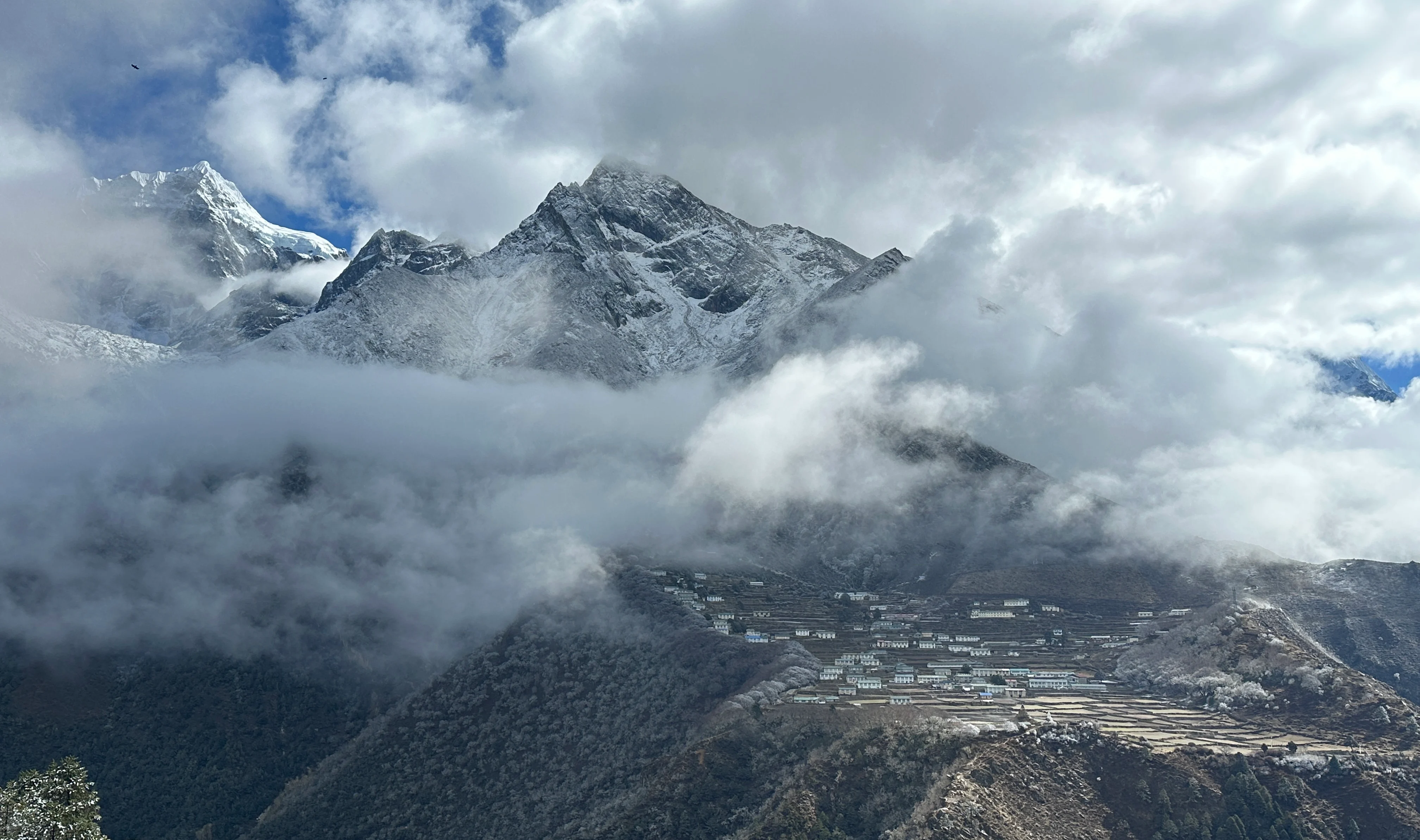
Dudhkunda sits in the Solukhumbu district, the same district that’s home to Everest, except this lake is tucked into the lower Solu region, beneath Numbur Himal (6,959m), well away from the Everest Base Camp crowds. The local municipality around it is literally named Solu Dudhkunda. That’s how central this lake is to local identity here, long before it ever showed up on a trekking map.
Why is Dudhkunda Sacred?
Locally, the lake is believed to be one of Lord Shiva’s resting places, and both Hindus and Buddhists consider its waters holy. Pilgrims still make the trip up to bathe in it despite the cold, believing it washes away sins and grants blessings. You’ll feel this the moment you arrive; there’s a stillness around Dudhkunda that’s different from the high-traffic energy of Gokyo or EBC.
What Makes Dudhkunda Different from Other Treks in Nepal?
Two things. First, almost nobody’s there. Second, you genuinely get to choose how you arrive, as you will be combining trekking with jeep, mountain bike, or motorbike, which is rare for any single destination in the Himalaya. Most routes in Nepal force you into one mode of travel. Dudhkunda doesn’t.
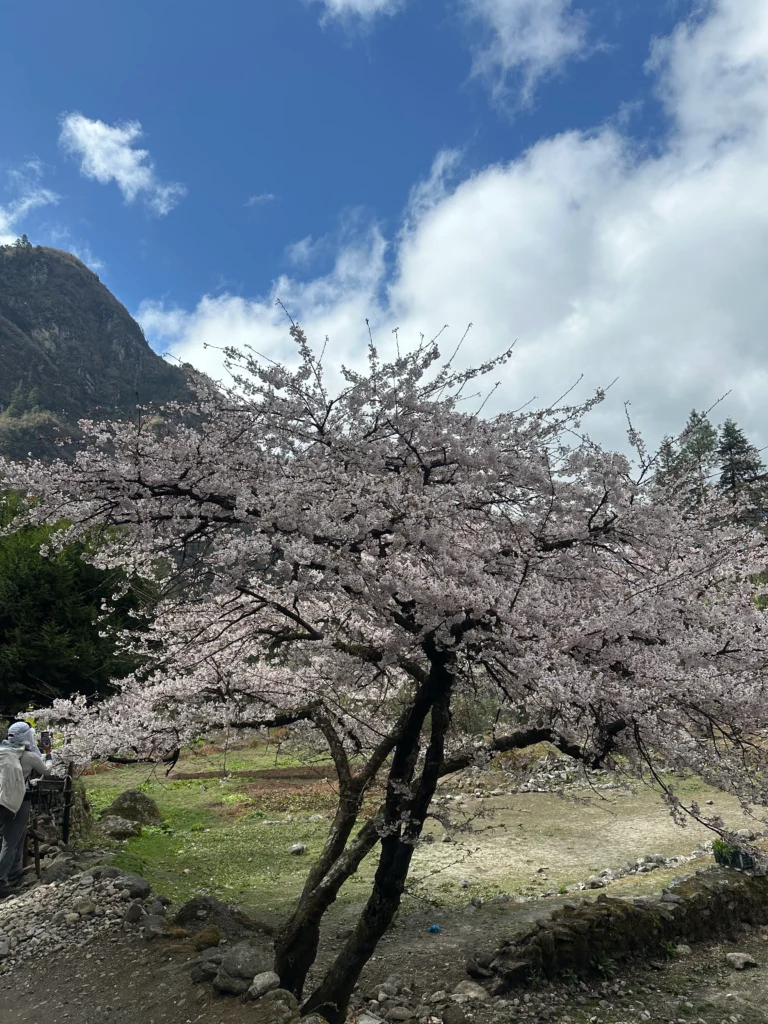
Why Dudhkunda Is One of Nepal’s Best Hidden Treks
If you’ve been searching for a hidden trek in Nepal or an off-the-beaten-path alternative to the usual Everest itinerary, here’s the short version of why we keep sending people here.
Less Crowded Than Everest Base Camp
Dudhkunda sees a fraction of the foot traffic EBC does, even in peak season. You’ll share the trail with yaks and the occasional pilgrim, not a queue of trekkers waiting for a teahouse table.
Rich Sherpa Culture
The villages along the way: Ringmo, Junbesi, Phaplu, are lived-in, not set up for tourism, where you can actually experience the life of Sherpas. You’re just as likely to be waved in for tea as you are to pass a monastery bell ringing somewhere in the distance.
Multiple Adventure Options
This is the part that makes Dudhkunda genuinely rare: it works as a trek, a jeep safari, a mountain biking trip, or a motorbike expedition. Most off-the-beaten-path destinations in Nepal only really offer you one way in.
No Domestic Flight Required
Unlike EBC, which usually means a Lukla flight that can be delayed for days in bad weather, Dudhkunda is fully reachable by road from Kathmandu. That alone removes one of the biggest stress points of an Everest region trip.
Authentic Village Experience
Because so few outsiders make it out here, daily life hasn’t been rearranged around tourism. That’s the trade-off with any hidden trek in Nepal: a little harder to find solid information on, but far more rewarding once you’re actually there.
How to Reach Dudhkunda: Four Different Adventure Styles
Here’s the direct answer for how to reach Dudhkunda, since this is probably why you’re here: there are four main ways to reach Dudhkunda Lake: trekking, a jeep safari, a mountain biking expedition, and a motorbike tour. Each route uses a different access point through Solukhumbu, and each one changes the feel of the trip completely. However, you will still have to trek for 2 days to Dudhkunda and back, even with a jeep safari, mountain biking or a motorbike tour.
| Route | Duration | Difficulty | Best For |
| Trekking | 7–12 days | Moderate | Culture, villages, a slower pace |
| Jeep Safari | 2–4 days | Easy–Moderate | Families, photographers, limited time |
| Mountain Biking | 6–10 days | Moderate–Hard | Experienced riders, endurance athletes |
| Motorbike Tour | 5–9 days | Moderate–Hard | Riders wanting remote roads and independence |
In short: trekking takes 7–12 days, a jeep safari takes 2–4 days, mountain biking takes 6–10 days, and a motorbike tour takes 5–9 days. So doesn’t matter how much time you have; there’s a version of this trip that fits.
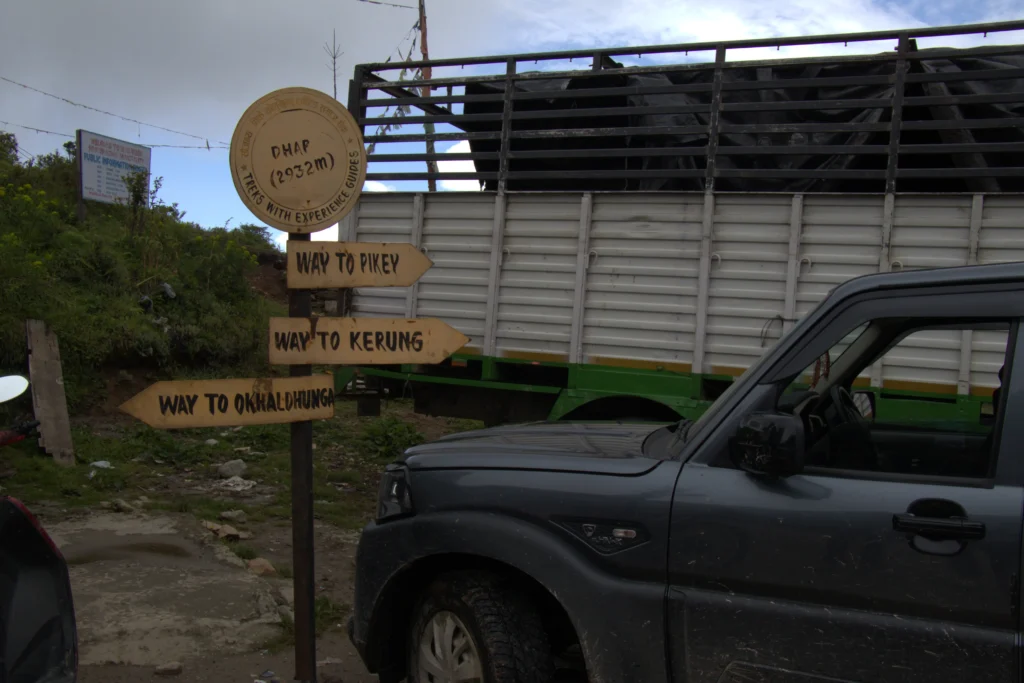

Dudhkunda Trek Route: The Classic Way to Reach Dudhkunda Lake
This is still the original way to see Dudhkunda, and for a lot of our guests, it’s still the best one.
Dudhkunda Trek Route Overview
Most itineraries drive into Phaplu or Salleri first, then trek through Sherpa and Rai villages such as Ringmo, Junbesi, and Thuptenchholing Monastery, before trekking to Sasharabeni from Taksindu, and finally up to Dudhkunda itself at 4,560m. Many routes combine it with our Pikey Peak Trek (4,065m), which gives you one of the best sunrise views of Everest you’ll get anywhere in Nepal, without another trekker in the frame.
Trek Difficulty and Fitness Requirements
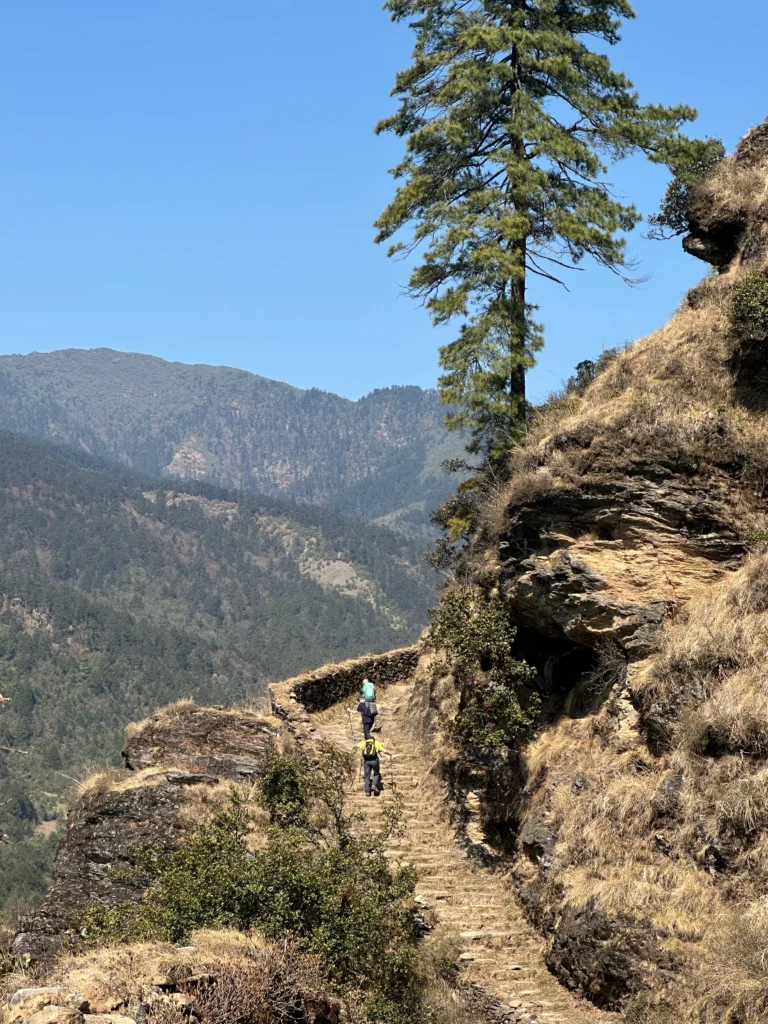
This is a moderate trek, not an extreme one. You’re walking through forest and ridge trails between roughly 2,400m and 4,560m, so you’ll feel the altitude near the lake, but you don’t need prior high-altitude experience. We tell first-timers this honestly: if you’ve done a multi-day hike before, you can do this.
What You’ll Experience on the Trail
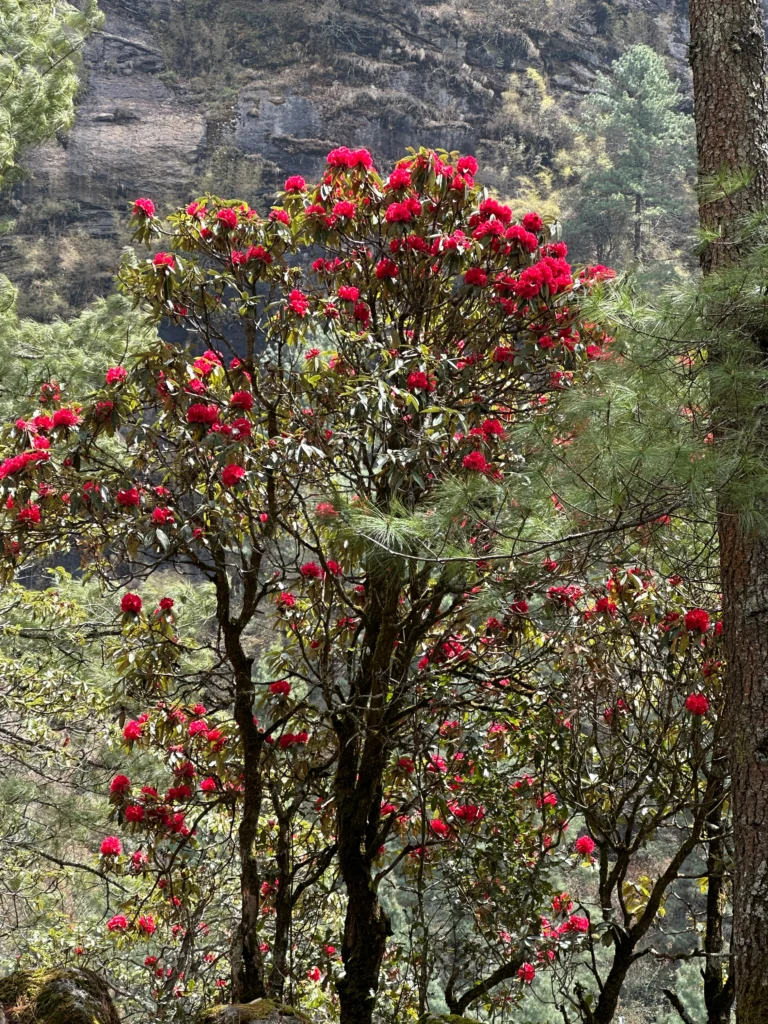
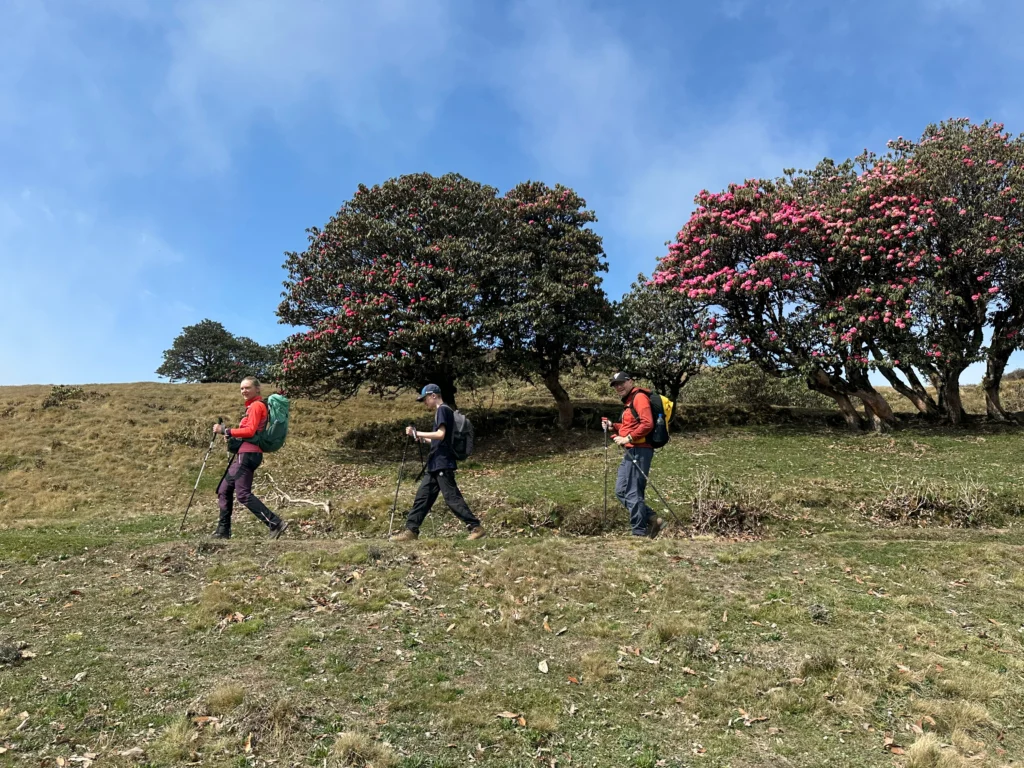
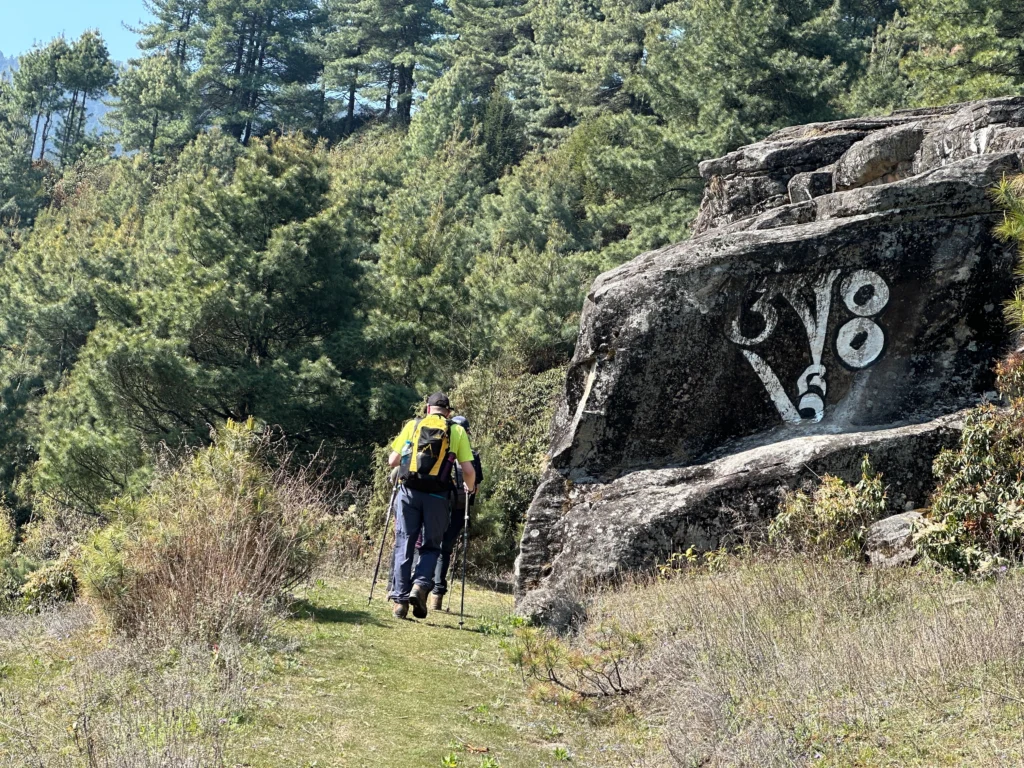
Rhododendron forest in spring, mani walls and old monasteries year-round, and Sherpa, Rai, and Tamang villages that still run on local life rather than tourism. Tea houses here are simpler than what you’d find on the EBC trail, and that’s part of the charm.
Who Should Choose the Trekking Route?
Anyone who wants the cultural depth, village stays, monastery visits, and conversations with locals who aren’t used to seeing many trekkers. If you want Nepal the way it was before the Everest trail got busy, this is it.
Want to trek to Dudhkunda? Check out our 12 Days Dudhkunda and Pikey Peak Trek itinerary
Dudhkunda Jeep Safari: The Fastest Way to Explore Solukhumbu
We did this drive ourselves recently, and it genuinely changed how we describe this option to clients.
How Far Can a Jeep Go?
A jeep can take you most of the way in, up to Taksindu (2,960m), right up to the trailhead in many itineraries, which surprises a lot of people who assume Dudhkunda needs a long walk-in like EBC. From there, it’s usually 2 days trek to reach the lake and return.
What the Off-Road Journey is Like
Honestly? It’s rough in the best way. The road from Kathmandu winds through the Sunkoshi valley, climbs through forested hills, and gets off-road for the final stretch into the Solu region: loose gravel, a few river crossings, switchbacks with views that make you forget about the road. We stopped counting how many times someone in our jeep said “wait, pull over” for a photo.
Best Time for a Dudhkunda Jeep Safari
Autumn (September–November) and spring (March–May) give you the clearest roads and the best mountain visibility. We’d steer you away from peak monsoon (July–August) as the off-road sections get genuinely difficult, not just bumpy.
Who is This Option Best For?
Families, photographers, and travelers who want the Solukhumbu experience without committing 10+ days. It’s also a great add-on if you’re short on time but don’t want to fly into the region. If this kind of trip is your thing, it’s worth browsing our other Nepal jeep adventures too.
Looking for a shorter adventure? Ask about our Dudhkunda Jeep Safari.
Mountain Biking to Dudhkunda: Nepal’s Hidden Cycling Adventure
This is the route most travelers don’t even know exists yet, and that’s exactly why our guiding team loves it.
Is Dudhkunda Suitable for Mountain Biking?
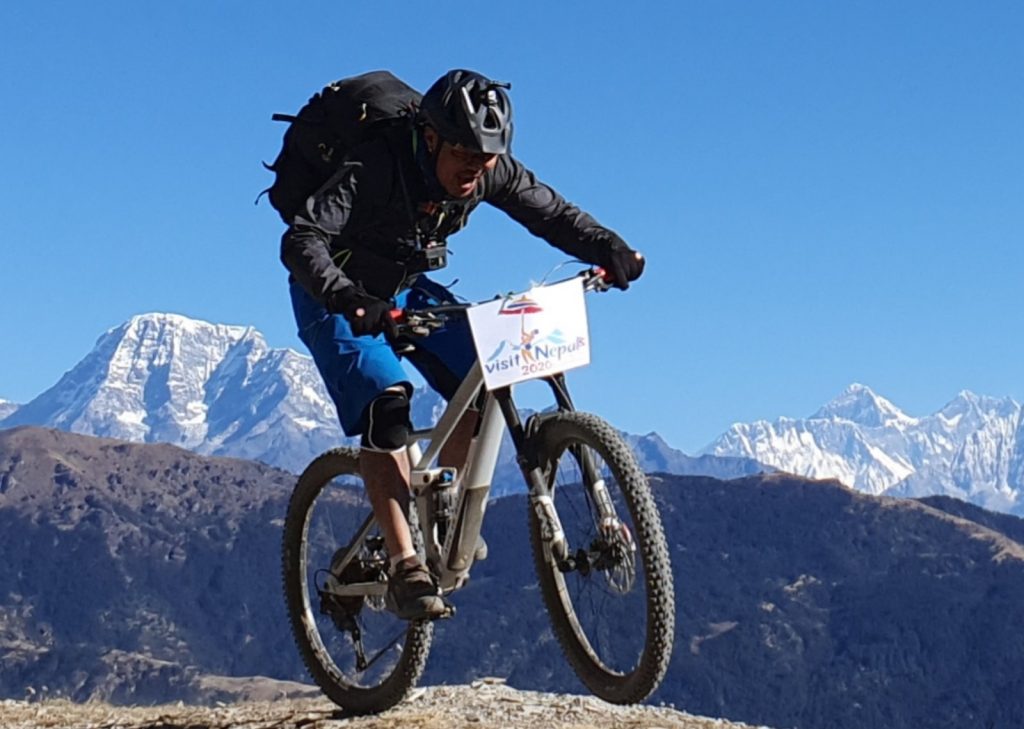
Yes, and Solukhumbu has quietly become one of Nepal’s best-kept mountain biking secrets. Phaplu now has a real trail network, built by a local mountain bike club, with dozens of kilometres of singletrack winding through community forest. It’s good enough that international enduro racers fly in for it.
We also do 12 Days Everest Pikey Peak Mountain Biking in the same region, and honestly, this is one of our most loved adventures. Simply imagine mountain biking through the beautiful routes of Solukhumbu to finally get to a point where you get the best views of Everest.
Terrain and Trail Conditions
Expect a mix: flowy forest singletrack, technical rocky descents, and long climbs that will test your legs at altitude. One of our guides, who’s ridden this route many times, always tells clients the same thing: the climbs humble you, the descents make up for it completely.
Challenges Mountain Bikers Should Expect
Altitude is the real factor here, not just technical skill. You’ll be riding over 3,500m, so pacing matters more than raw fitness. Loose gravel sections and river crossings also mean intermediate-to-advanced bike handling is a real asset, not just a nice-to-have.
Why Cyclists Love Solukhumbu
Because it doesn’t feel manufactured. These trails follow old farming and herding paths through Sherpa villages, not purpose-built bike park lines. You’re riding through someone’s actual home, not a theme-park version of the Himalaya. If Solukhumbu has you hooked, it’s worth taking a look at our other mountain biking tours in Nepal as well.
Get a customized mountain biking itinerary.
Dudhkunda Motorbike Tour Through Solukhumbu
If trekking is slow travel, this is the opposite end of the spectrum, and it’s becoming one of our most-requested custom trips.
Keep in mind that you will still have to trek from Taksindu (2,960m).
Riding Through Solukhumbu’s Remote Roads
The ride out of Kathmandu takes you through Sailung before climbing into Solukhumbu via Salleri and Phaplu. The roads go from smooth tarmac to proper mountain gravel without much warning. It’s a route that rewards riders who actually enjoy the unpredictability, not just the
Road Conditions and Bike Requirements
You’ll want a bike built for mixed terrain, something like a XPulse or a dual-sport and not a street cruiser. Parts of the road are paved, parts are loose gravel and switchbacks, and a few stretches will test your low-speed control.
You can contact us to know about adventure bikes price in Nepal. We will sort out the bikes for you after you book with Himalayan Leaders.
What Makes This Ride Different from Other Nepal Motorcycle Tours?
Most Nepal motorbike tours head toward Mustang or the Annapurna Circuit. The Solukhumbu route puts you in the shadow of Everest itself, through Sherpa territory most riders never see, ending at a sacred alpine lake instead of a town square.
Who Should Choose the Motorbike Route?
Riders who want independence, distance, and a real sense of remoteness, and who don’t mind getting their boots dusty at the end of each day.
Plan your Himalayan motorcycle expedition with our team.
Which Dudhkunda Adventure Is Right for You?
| Traveler Type | Recommended Route |
| Wants culture and village life | Trekking |
| Photographer or family, limited time | Jeep Safari |
| Adventure rider chasing remote roads | Motorbike Tour |
| Endurance athlete wanting a challenge | Mountain Biking |
| Solo traveler wanting deep immersion | Trekking |
Exploring Solukhumbu Beyond Dudhkunda
Dudhkunda is the destination, but the area around it deserves its own mention. This is as much a Solukhumbu travel guide as it is a single-trek itinerary, since most of the places below sit right along your route. If you’re looking for things to do in Solukhumbu beyond the lake itself, start here, or browse our wider Solukhumbu trekking adventures.
Salleri: Solukhumbu’s District Hub
Salleri is the administrative center of Solukhumbu and usually your first proper stop after the long drive from Kathmandu. It has more shops, guesthouses, and everyday Nepali town life than most people expect this deep in the hills.
Phaplu: Gateway to the Everest Region
Phaplu sits just below Salleri and doubles as both an airstrip town and, more recently, the unofficial home of Solukhumbu’s growing mountain biking scene. Pair it with Dudhkunda and you’ve arguably got the best trek in Solukhumbu for travelers who want more than just a single viewpoint.
Junbesi: One of Solu’s Most Beautiful Sherpa Villages
Terraced fields, traditional architecture, and one of the most photogenic Sherpa villages in the lower Khumbu. Most of our trekking and biking routes pass straight through it.
Thupten Chholing Monastery
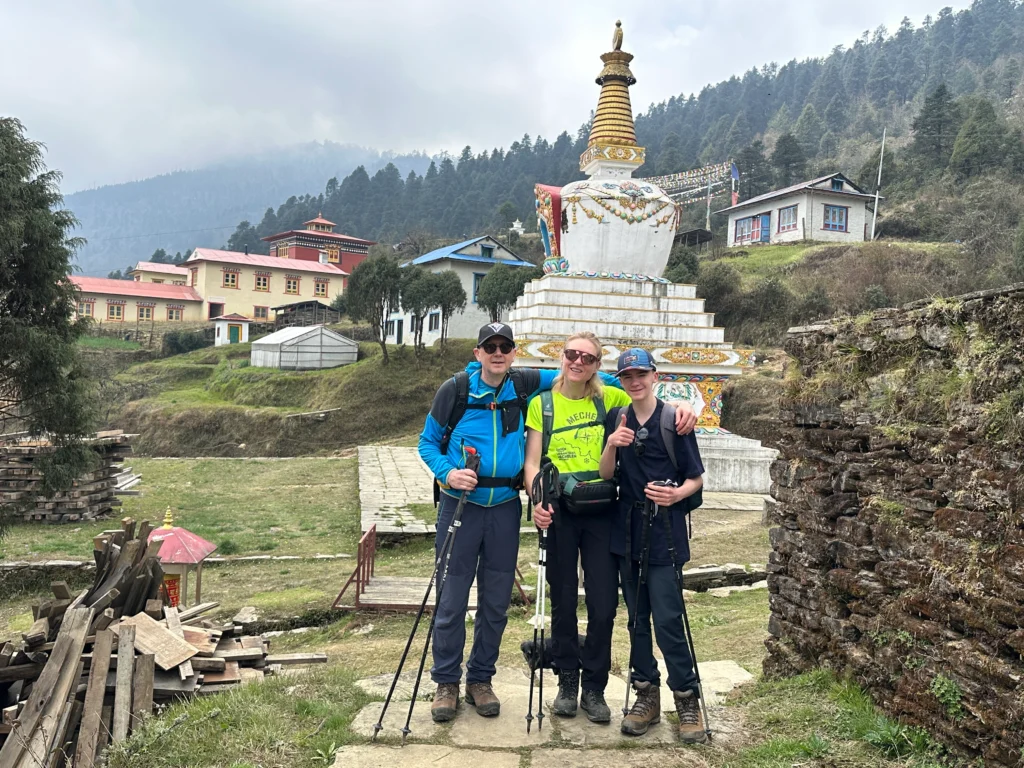
A major monastic learning center near Junbesi, home to hundreds of monks and nuns. Worth the short detour even if you’re not religious; the setting alone is reason enough.
Honestly, we were surprised when we saw the beautiful monastery in such a remote location.
Pikey Peak: Everest Views Without the Crowds
Most Dudhkunda itineraries combine the lake with our Pikey Peak Trek, and for good reason. At 4,065m, Pikey Peak gives you a genuine sunrise panorama of Everest, Makalu, and Kanchenjunga, usually with nobody else around for the view.
Many trekkers are surprised to learn that Pikey Peak was Sir Edmund Hillary’s favorite place to watch Mount Everest.
Best Time to Visit Dudhkunda
Quick answer: the best time to visit Dudhkunda is autumn (September–November) or spring (March–May), when trails and roads are clearest and mountain visibility is at its best. Here’s how each season actually plays out.
Spring (March–May)
Rhododendron forests bloom across the lower trails, visibility is generally excellent, and trekking and biking conditions are at their best.
Autumn (September–November)
Our top recommendation across all four routes. Clear skies, stable jeep roads, and the best mountain visibility of the year. This is when most of our Dudhkunda trips run.
Monsoon Considerations
June through August brings heavy rain, slippery trails, and difficult jeep roads. We don’t recommend this window for any of the four routes, jeep especially.
Winter Conditions
December through February is cold and quiet near the lake, with snow likely at higher points. Trekking is still possible with the right gear, but biking and motorbiking become considerably harder.
How Difficult Is Dudhkunda?
The Dudhkunda Trek is a moderate trek reaching 4,561 metres. Most reasonably fit travelers can complete it without prior mountaineering experience, although proper acclimatization is recommended. Jeep routes are even more accessible, while mountain biking and motorbiking demand more technical skill and stamina due to altitude and terrain.
Trekking Difficulty
Moderate. Long walking days and some steep sections, but no technical climbing.
Altitude Considerations
The lake sits at 4,561m, high enough to require sensible pacing and hydration, but not in extreme-altitude territory.
Fitness Requirements
General fitness and prior multi-day hiking experience help, but you don’t need mountaineering experience.
Is Dudhkunda Suitable for Beginners?
For trekking and jeep options, yes, with the right guide and pacing. For biking and motorbiking, some prior off-road experience makes a real difference.
Dudhkunda vs Everest Base Camp: Which Adventure Should You Choose?
| Factor | Dudhkunda | Everest Base Camp |
| Crowds | Quiet, rarely crowded | Heavily trafficked in peak season |
| Cost | Generally lower, no flights needed | Higher due to flights, permits, premium lodges |
| Authenticity | Untouched Sherpa village life | Increasingly commercialized |
| Accessibility | Drivable by jeep, bike, or motorbike | Mostly trek-only, often flight-dependent |
| Adventure Variety | Four routes to choose from | Primarily trekking only |
If you’ve already done the Everest Base Camp Trek, or you just want the Everest region without the queues, Dudhkunda is the trip we point people toward most.
Essential Travel Tips for Visiting Dudhkunda
Permits Required
You’ll need a TIMS card and a Solukhumbu Rural Municipality Restricted Area Permit. We handle both for every Himalayan Leaders trip, so you don’t need to chase paperwork yourself.
Accommodation Options
Tea houses and lodges along the lower trail, with limited facilities near the lake itself.
Packing List
Layered clothing for big day-to-night temperature swings, a proper sleeping bag for camping nights, and solid footwear regardless of which route you choose.
Safety Tips
Build in acclimatization time, especially if you’re trekking or biking straight through to 4,561m. Listen to your guide on pacing: altitude doesn’t care how fit you are.
Responsible Travel Practices
Respect the lake’s sacred status, no swimming, and follow your guide’s lead on local customs. Pack out what you bring in; this region stays beautiful because so few people have damaged it so far.
Why Dudhkunda Should Be Your Next Himalayan Adventure
One lake. Four completely different ways to experience it. That’s not a marketing line; it’s genuinely rare in Nepal. You get the option to slow down and walk through Sherpa villages, push your limits on a mountain bike, ride the open road on two wheels, or take in the Himalaya’s scale from a jeep window. However, you choose to get there, you arrive at the same place: a quiet, sacred, milky-white lake under Numbur Himal that most travelers in Nepal have never even heard of.
We’ve watched the look on people’s faces when they reach it. It’s never the same energy as Everest Base Camp; it’s quieter, and somehow that makes it hit harder.
Plan Your Dudhkunda Adventure with Himalayan Leaders
This isn’t a route we read about and packaged. We’ve driven it. Our guides have ridden it more times than they can count. That’s the difference when you plan this trip with us instead of piecing it together from a dozen different blog posts.
Why travel with Himalayan Leaders?
- Local guides who know Solukhumbu’s villages, trails, and roads firsthand
- Flexible itineraries across all four routes: trek, jeep, mountain bike, or motorbike
- Full support for trekking, biking, jeep, and motorbike trips, including permits and logistics
- A safety-first approach built on real route experience, not guesswork
- Fully customizable trips, whether you want a relaxed week or an adrenaline-packed expedition
Ready to explore Dudhkunda?
Frequently Asked Questions
How long does the Dudhkunda Trek take?
Most trekking itineraries run 7 to 12 days, depending on whether you combine it with Pikey Peak and your pace through the villages.
Can I reach Dudhkunda by jeep?
Yes. A jeep can take you most of the way in, usually leaving just a short trek or day hike to reach the lake itself.
Is the Dudhkunda Trek difficult?
It’s a moderate trek. You’ll feel the altitude near the 4,560m lake, but it doesn’t require technical climbing or prior high-altitude experience.
What is the best time to visit Dudhkunda?
Autumn (September–November) and spring (March–May) offer the clearest skies and best trail or road conditions across all four routes.
Can beginners trek to Dudhkunda?
Yes, with the right guide and pacing. Some multi-day hiking experience helps, but it’s not required.
Is mountain biking to Dudhkunda possible?
Yes. Solukhumbu has a growing network of mountain biking trails, including technical singletrack that’s drawn international enduro riders to the region.
Can I do a motorbike tour to Dudhkunda?
Yes. The route runs through Sindhuli, Okhaldhunga, Salleri, and Phaplu, mixing paved roads with mountain gravel, ending near the sacred lake.


